 The Fine Print
Nothing here was tested in a lab. Every line below is a synthesis of what verified buyers report in their own reviews, including the complaints, which is the part most roundups leave out.
As an Amazon Associate we earn from qualifying purchases. Product links below are affiliate links, and the price you pay is the same either way. Full disclosure.
Five battery cases, five different brand names, and one manufacturer. JBUBN, MAXBEAR, YINGYKJ and two that carry no brand at all all list Shenzhen FengYunTong Technology as the maker, every model number begins FYT, and the marketing copy repeats almost word for word down to the same bracketed headings. They are the same product in different shells, cut for different phones.
That single fact explains why the complaints are also the same. Three of the five draw reports that the real capacity falls far short of the number on the box. The other two draw reports that the charging stopped working altogether. Below is what each one claims, what it weighs, and why the two figures cannot both be true.
The short answer
- Best reviewed, with the largest sampleGalaxy S26 Ultra Battery Case. 4.4 stars from 488 ratings, the biggest sample here, and reviewers treat it as a straightforward fix for a phone whose own battery is worn out. Several nonetheless say it barely delivers half a charge and that the wireless connection feels unstable. Fits the Galaxy S26 Ultra only.
- For an S22 or S23 UltraGalaxy Ultra Battery Case. 4.4 from 389 ratings, fits well, charges quickly. Its reviewers are unusually specific about the shortfall: several put the real capacity at 4,000 to 5,000mAh against the 12,000 advertised. Buy it expecting roughly a third of the number on the listing.
- The only iPhone 17 Pro Max option hereiPhone 17 Pro Max Battery Case. 4.4 stars, but from just 42 ratings, which is far too small a sample to lean on. The recurring complaint is not a shortfall but a stoppage: several say the charging function quit entirely after a period of normal use. Test it hard inside the return window.
- Think twicePixel Battery Case. 3.5 stars from 72 ratings. Reviewers report the real capacity falling well short of the 10,000mAh claimed and charging being noticeably slow. It is also one of the two here that publishes a weight, and that weight is the problem described below.
- The one to avoidiPhone 15 Battery Case. 3.2 stars from 204 ratings, the worst score on this page from a sample big enough to mean something. The repeated complaint is that the charging port stopped working within a couple of months, which turns the case into an ordinary case.
All 5 compared
| Product | Capacity | Listed weight | Made by | Rating | The catch |
|---|---|---|---|---|---|
| Galaxy S26 Ultra Battery Case | 12,000 mAh | 113 g | Shenzhen FengYunTong | 4.4 (488) | Several reviewers say it barely delivers half a charge and the wireless... |
| Galaxy Ultra Battery Case | 12,000 mAh | Not stated | Shenzhen FengYunTong | 4.4 (389) | Several reviewers say the real capacity is closer to 4,000 or 5,000 milliamp... |
| iPhone 17 Pro Max Battery Case | 12,000 mAh | Not stated | Shenzhen FengYunTong | 4.4 (42) | Several reviewers say the charging function stopped working entirely after... |
| Pixel Battery Case | 10,000 mAh | 115 g | Shenzhen FengYunTong | 3.5 (72) | Several reviewers say the real capacity falls well short of the advertised... |
| iPhone 15 Battery Case | 10,000 mAh | Not stated | Shenzhen FengYunTong | 3.2 (204) | Several reviewers say the charging port stopped working within a couple... |
Five brands, one factory
The Manufacturer field is the most useful line in an Amazon spec sheet and almost nobody reads it. On this page all five entries read Shenzhen FengYunTong Technology, across products sold as JBUBN, MAXBEAR, YINGYKJ and two with no brand name at all.
The model numbers confirm it: FYT-D10, FYT-B10, FYT-B98, FYT-G98S, FYT-A49. So does the copy, which repeats the same bracketed headings and the same sentence about doubling your daily use time, with only the phone model and the capacity number swapped.
This matters when you are comparing them. Choosing between four of these on brand, rating or price feels like a choice and is not one. It also means a design flaw in one is a design flaw in all of them, which is what the shared complaints look like.
The listed weight makes the capacity impossible
Two of the five publish a weight, and both weights rule out the capacity printed beside them.
The arithmetic is short. A cell's energy in watt-hours is its milliamp-hours divided by 1,000, times 3.7 volts. So 12,000mAh is 44.4 watt-hours, and 10,000mAh is 37. The best lithium-ion cells in consumer products store roughly 250 watt-hours per kilogram, and pouch cells in this shape are usually well under that.
The 12,000mAh case lists a total weight of 113 grams. Its cells alone would need to weigh about 178 grams, before any shell, circuit board or connector. Taken at face value the listing implies about 392 watt-hours per kilogram. The 10,000mAh case lists 115 grams and implies 322. Both are well beyond anything lithium-ion does.
Either the capacity is overstated or the weight is wrong. And the reviewers, independently and without doing any of this arithmetic, report exactly the shortfall the numbers predict.
Even an honest battery case gives you less than its number
Set the impossible claims aside for a moment, because there is a second and entirely legitimate reason these disappoint. Capacity is quoted at the cell's 3.7 volts, but your phone charges at 5 volts or more, and converting between them costs energy, as does the heat every charge produces.
The practical result is that roughly 60 to 70 percent of the printed figure reaches the phone, even when the printed figure is true. This is the same arithmetic that governs portable power banks, and it is why a buyer expecting a full charge from a case is often disappointed by one that is working correctly.
Stack the two effects and a case advertised at 12,000mAh, actually holding perhaps 5,000, delivering 65 percent of that, gives you something in the region of a single phone charge. Which is precisely what the reviews describe.
Two failure patterns, and one of them ends the product
The complaints here split cleanly. Three of the five are capacity complaints: it does not hold what it claims, it delivers half a charge, the real figure is closer to 4,000 than 12,000. Annoying, and survivable, because you still have a case that does something.
The other two are stoppages. The charging port stopped working within a couple of months. The charging function stopped entirely after normal use. That is not a disappointing product, it is a dead one, and it leaves you with a thick, heavy ordinary case.
Note where those land. One is the lowest-rated entry on the page at 3.2 stars, with 204 ratings behind it, which is a large enough sample to take seriously. The other carries a 4.4 average but from only 42 ratings, which is too few to read either way. A high score on a small sample is not reassurance, it is an absence of evidence.
The connector is the part that lives hardest
A battery case charges the phone through a fixed plug that sits permanently in the phone's port, and the whole case flexes every time you take the phone in and out of a pocket. That connector is carrying mechanical load continuously in a way a cable never does.
The failures reported here are the case's charging quitting rather than the phone's port failing, which is the better of the two outcomes, but it explains why stoppage is such a common ending for this category rather than a gradual fade.
It also means the first month is the real test. Charge it flat and full several times while the return window is open, rather than leaving it in a drawer for the trip you bought it for.
What to buy instead
The honest recommendation for most people is not on this page. A magnetic power bank does the same job with none of the structural problems: you can see and feel its real size, it does not sit in your port, it survives your next phone, and when it fails you replace a thirty-gram accessory rather than your case.
A battery case earns its place in exactly one situation, which is a phone whose own battery is worn out and which you intend to keep. That is what the best-reviewed case here is actually being bought for, and its reviews say so.
If that is not you, the power bank comparison covers eleven alternatives on capacity, output and the complaints that repeat in their reviews.
Every one, in detail
As an Amazon Associate we earn from qualifying purchases. Product links below are affiliate links, and the price you pay is the same either way. Full disclosure.
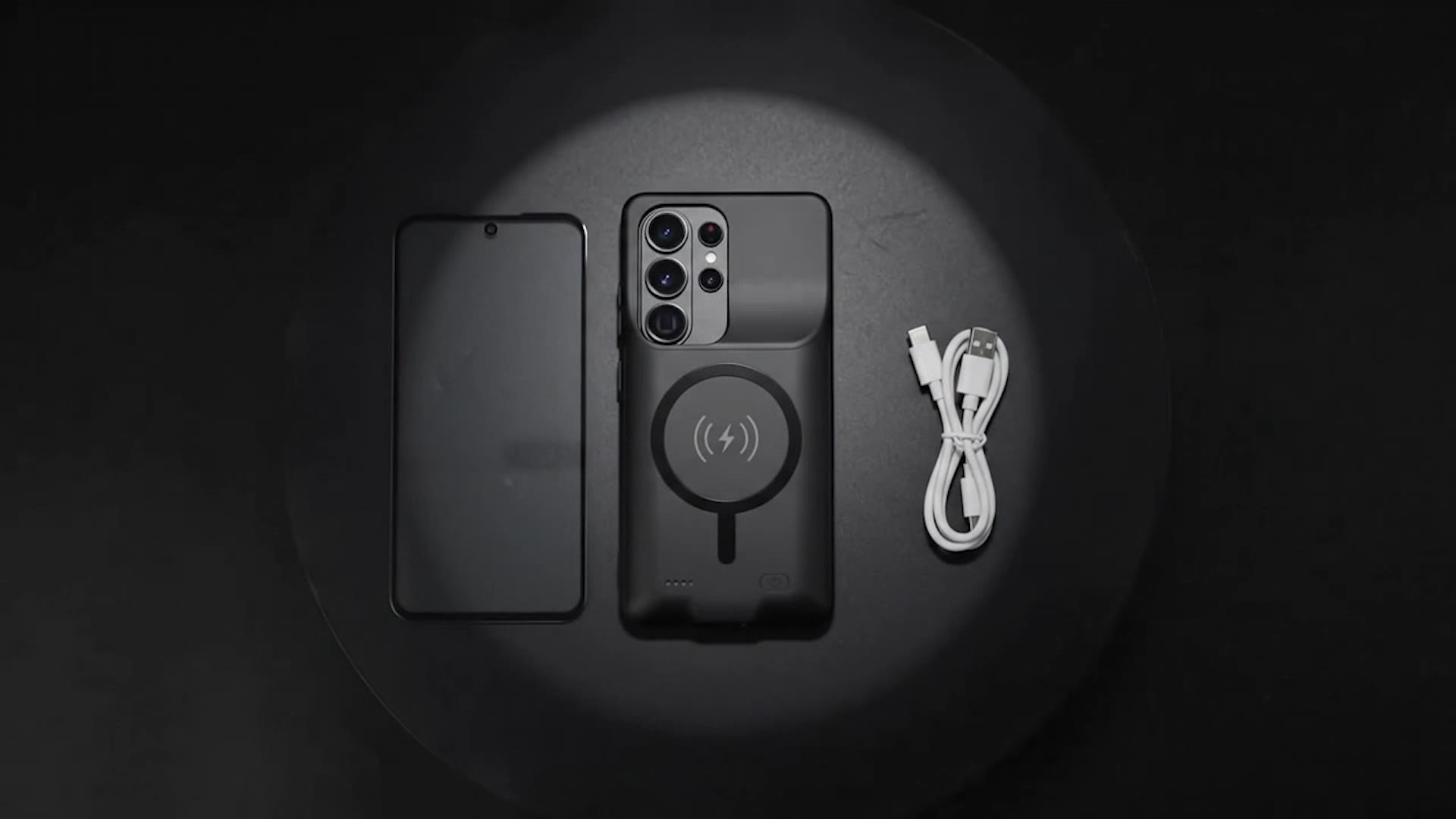
Galaxy S26 Ultra Battery Case
12,000 mAh · 113 g · Shenzhen FengYunTong
Reviewers say it's a straightforward upgrade over an older or worn out battery.
The catch. Several reviewers say it barely delivers half a charge and the wireless connection can feel unstable.
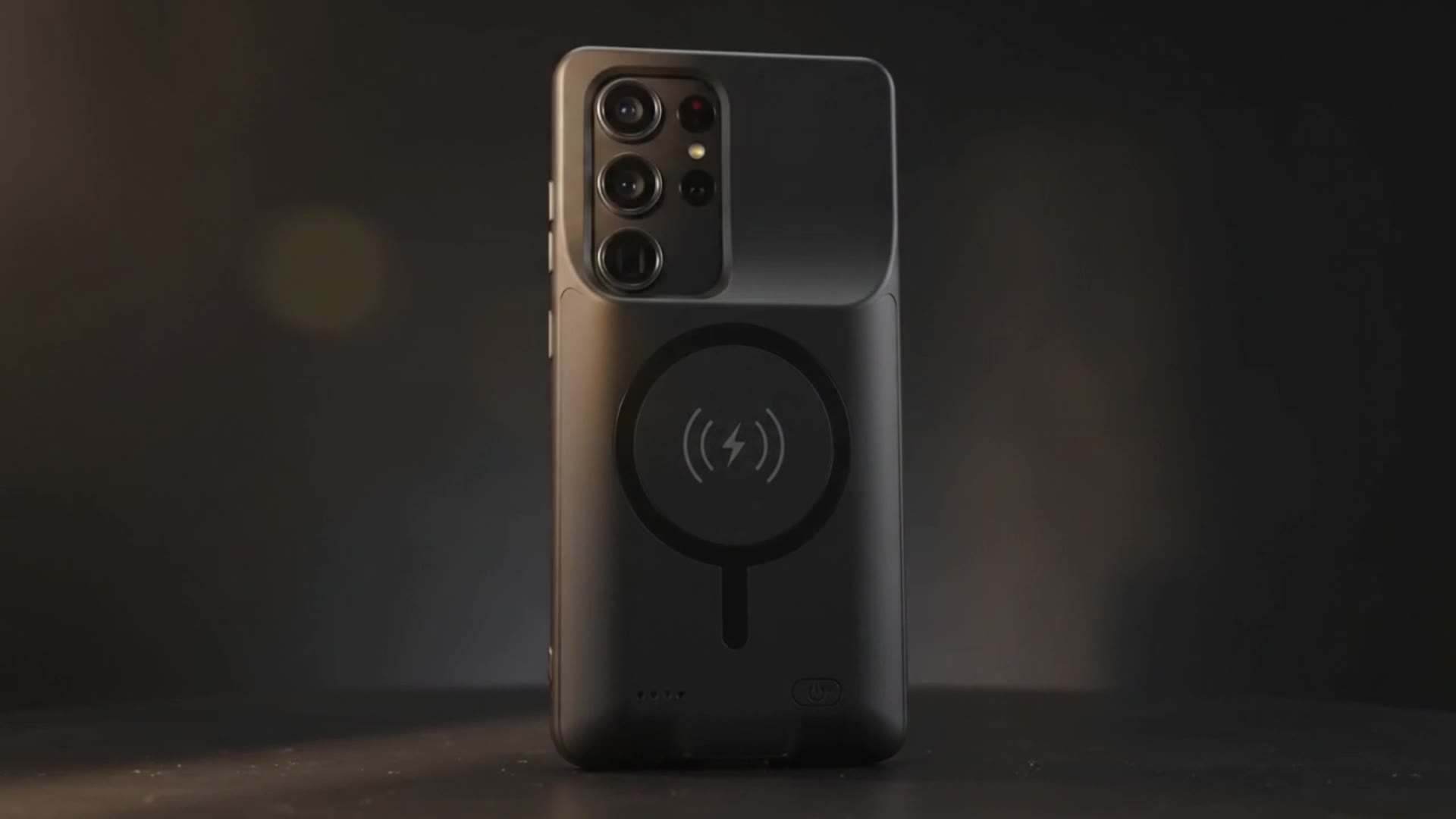
Galaxy Ultra Battery Case
12,000 mAh · Not stated · Shenzhen FengYunTong
Reviewers say it fits the S22 Ultra and S23 Ultra well and charges the phone quickly.
The catch. Several reviewers say the real capacity is closer to 4,000 or 5,000 milliamp hours than the advertised 12,000.

iPhone 17 Pro Max Battery Case
12,000 mAh · Not stated · Shenzhen FengYunTong
Reviewers say it comes in handy once the phone's own battery finally starts to fade during the day.
The catch. Several reviewers say the charging function stopped working entirely after a period of normal use.

Pixel Battery Case
10,000 mAh · 115 g · Shenzhen FengYunTong
Reviewers say it helps get through a full day without needing a separate charger.
The catch. Several reviewers say the real capacity falls well short of the advertised 10,000 milliamp hours, and charging is noticeably slow.

iPhone 15 Battery Case
10,000 mAh · Not stated · Shenzhen FengYunTong
Reviewers say the case adds a solid extra charge with quick wireless pickup.
The catch. Several reviewers say the charging port stopped working within a couple of months.
Questions people ask
- Why does my 12,000mAh battery case only give half a charge?
Two reasons stack. Capacity is quoted at 3.7 volts while your phone charges at 5 or more, so only about 60 to 70 percent of a true figure ever reaches the phone. And on this page the printed figures are unlikely to be true: the listed weights are lighter than the claimed cells could possibly be.
- Are these battery cases all the same product?
The spec sheets say so. All five list Shenzhen FengYunTong Technology as manufacturer, every model number starts with FYT, and the marketing copy repeats nearly word for word. The brand names differ; the product does not.
- How can I tell whether a capacity claim is plausible?
Convert to watt-hours, which is milliamp-hours divided by 1,000 times 3.7, then compare against the listed weight. The best consumer lithium-ion stores about 250 watt-hours per kilogram. If the claim needs more than that, before you even count the plastic, the claim is wrong.
- Is a battery case better than a power bank?
Rarely. A power bank is easier to judge by size, does not live in your charging port, works with your next phone, and is cheaper to replace when it fails. A battery case makes sense mainly for a phone with a worn out battery that you intend to keep.
- Why did the charging stop working after a couple of months?
It is the most common serious failure in this category. The case's connector sits permanently in the phone's port and takes mechanical load every time the phone goes in and out of a pocket. Two of the five here draw exactly this complaint, and both are the lowest-rated entries.
- Will a battery case damage my phone's port?
The reported failures here are the case's own charging quitting rather than damage to the phone, which is the better outcome. Still, a fixed connector under constant load is the design's weak point, so test the case thoroughly in the first month while you can return it.
More comparisons
- Portable Power Banks: what reviewers actually report
- Camping Tents: what reviewers actually report
- Sleeping Bags: what reviewers actually report
- Waterproof Phone Pouches: what reviewers actually report
- Car Phone Mounts: what reviewers actually report
- Phone Screen Protectors: what reviewers actually report
- USB-C Wall Chargers: what reviewers actually report
- Desktop Charging Stations: what reviewers actually report
- Phone Tripods: what reviewers actually report
- Trailer Jacks: what reviewers actually report