 The Fine Print
Nothing here was tested in a lab. Every line below is a synthesis of what verified buyers report in their own reviews, including the complaints, which is the part most roundups leave out.
As an Amazon Associate we earn from qualifying purchases. Product links below are affiliate links, and the price you pay is the same either way. Full disclosure.
The number on a trailer jack is the vertical load it handles at the coupler. It is not the weight of the trailer, and reading it as though it were is the most common mistake in this category, in both directions: people buy far more jack than they need, and occasionally far less.
Tongue weight on a conventional bumper-pull trailer normally runs 10 to 15 percent of the loaded trailer weight. So a jack rated 5,000 pounds is not a jack for a 5,000 pound trailer. What usually decides whether one of these works for you is not capacity at all, but whether it bolts to your frame and whether it lifts far enough to clear your hitch ball.
The short answer
- The one with the most evidence behind itPOLESTAR Electric Trailer Jack, 5000lbs... 4.6 stars from 849 ratings, several times the sample of anything else here, with owners reporting a direct factory swap in twenty minutes to an hour. Ball screw drive and a one-year warranty. One reviewer reports it failing at five months and getting no useful customer support, and another warns that the supplied bolts are weak.
- Best for a boat trailerKYX Boat Trailer Jack, 2200 lbs Swivel... 4.3 from 181 ratings, with 6-inch dual wheels that reviewers single out for mud, sand and gravel, a marine-grade anti-rust coating and a swing-up swivel that folds flat for clearance. It takes bolt-on or weld-on mounting. Note the published vertical lift is 10.2 inches, which is short, and one reviewer finds the mounting hardware flimsy enough to need regular tightening.
- Best of both, if you own a cordless drillRVSHARK 5500 lbs A-Frame Trailer Jack... Runs from a 20 to 24 volt drill for speed or the side handle when there is no battery, which sidesteps the whole electric-versus-manual question. Seven-level quick-adjust drop leg, and a green-yellow-red indicator marking maximum safe extension. The warranty is 60 days, the shortest here by a wide margin, on a part that holds up a trailer.
- Best for a low-profile or small trailerKohree 3000 lbs Trailer Jack, Heavy... Adjusts from 21.7 to 36.6 inches, galvanised, with a detachable side handle, and reviewers report swapping out rusted jacks in minutes on boats, mowers and mid-size trailers. The thing to check before ordering is the mount: it bolts only to frames between 3 and 5 inches, so measure yours.
- Highest rated capacity herePOLESTAR Electric Trailer Jack, 7500lbs... 7,500 pounds, three bolts to install, a built-in light, and it runs from the tow vehicle rather than drawing down the trailer battery. Only 50 ratings behind it, which is thin, and one reviewer reports it breaking shortly after installation with a replacement part failing to fix it.
All 5 compared
| Product | Rated capacity | Operation | Warranty | Rating | The catch |
|---|---|---|---|---|---|
| POLESTAR Electric Trailer Jack, 5000lbs Electric Power... | 5,000 lbs | electric | 1 year | 4.6 (849) | One reviewer says theirs failed after five months with no working customer... |
| POLESTAR Electric Trailer Jack, 7500lbs Electric Power... | 7,500 lbs | electric | 1 year | 4.4 (50) | One reviewer says theirs broke shortly after install, and a replacement part... |
| KYX Boat Trailer Jack, 2200 lbs Swivel Trailer Jack... | 2,200 lbs | manual | 1 year | 4.3 (181) | One reviewer says the mounting hardware feels flimsy and may need frequent... |
| RVSHARK 5500 lbs A-Frame Trailer Jack, Heavy Duty... | 5,500 lbs | drill or manual | 60 days | 4.0 (88) | It's rated for 5,500 pounds max, so heavier trailers need a bigger jack. |
| Kohree 3000 lbs Trailer Jack, Heavy Duty Bolt-on... | 3,000 lbs | manual | Not specified | 4.0 (57) | It only bolts onto trailer frames between 3 and 5 inches, so measure yours... |
The rating is tongue weight, not trailer weight
A tongue jack lifts the front of the trailer. What it carries is the tongue weight, meaning the downward force at the coupler, and that is a fraction of what the trailer weighs.
On a conventional bumper-pull the figure is normally 10 to 15 percent of the loaded trailer weight. A fifth wheel or gooseneck carries more, commonly 15 to 25 percent as pin weight. Boat trailers usually sit lower still. So a 5,000 pound jack is not matched to a 5,000 pound trailer; at a typical 12 percent it corresponds to a trailer several times heavier.
The practical upshot is that on most consumer trailers capacity is not the binding constraint, and fit and lift range are. That is not a licence to under-buy: check your trailer's rated tongue weight, weigh it loaded if you can, and follow the jack manufacturer's own guidance rather than this arithmetic. But it does explain why people end up with far more jack than they needed.
Over-extension is a leading cause of failure, and one seller says so
One listing on this page fits a green, yellow and red indicator marking maximum extension, and describes over-extension in its own marketing copy as a leading cause of jack failure. It is unusual for a seller to name the failure mode, and it is worth taking seriously.
The reason is engagement. As the inner tube runs out, less and less of the screw and the tube overlap, until the entire load of the trailer is carried on a short section of thread and a few inches of tube. That is where jacks bend, and it happens on uneven ground where people wind the leg out further than they meant to.
If your jack has no indicator, find its stated maximum extension and mark the tube yourself with tape or paint. Then use a block under the foot rather than more extension when the ground drops away.
Electric adds three things a manual jack cannot fail at
An electric jack has a motor, a gearbox and a wiring loom. A manual one has a crank and a screw. That difference shows up clearly in the complaints on this page.
Both electric jacks here draw a report of outright failure: one stopped working at five months with no useful support, the other broke shortly after installation and a replacement part did not fix it. The manual jacks draw complaints about flimsy mounting hardware and frame fitment. Both matter, but only one of them leaves you unable to raise the trailer.
This is an argument for keeping the manual override honest rather than against electric jacks. Every electric jack should come with an emergency crank, and you should find it and try it once in the driveway, not on the night the motor dies. The drill-driven design here is an interesting middle path: the powered convenience without a motor permanently bolted to the trailer.
Lift range decides whether you can actually uncouple
This is the specification that catches people out, and only two of the five publish it clearly. The boat trailer jack states 10.2 inches of vertical lift. The low-profile jack adjusts between 21.7 and 36.6 inches.
Ten inches is plenty on a low tow vehicle and not enough on a lifted truck, where the ball sits high and you need the coupler to come up over it and stay clear. The way to check is to measure your coupler height when hitched, measure your ball height, and make sure the jack's travel covers the difference with room to spare on uneven ground.
A drop leg, which several of these have, buys you range without extending the screw, and that is the better way to get height. It is also why the seven-level adjustable base on one of these is a more useful feature than it sounds.
Frame fit is the most common reason one of these goes back
Trailer jacks mount in incompatible ways: bolt-on through the A-frame, weld-on, or into a tube of a specific diameter. One jack here states plainly that it bolts only to frames between 3 and 5 inches. Another supports both bolt-on and weld-on.
None of this is visible from a product photo, and a jack that is perfect in every other respect is useless if the bolt pattern misses your frame. Measure the frame width, note the existing bolt spacing, and photograph the old jack's mount before you remove it.
It is also worth ordering while your old jack still works. Discovering a fit problem with the trailer already sitting on blocks is a bad afternoon.
The warranty range here runs from 60 days to a year
On a part whose job is holding several thousand pounds off the ground, the warranty spread across these five is striking: one year on three of them, an unspecified service promise on another, and 60 days on the fifth.
Sixty days covers roughly one camping season's opening weekend. Neither failure reported on this page happened to the 60-day product, but one of them arrived at five months, which is the sort of timeline such a window would leave you carrying alone.
Warranty length is a manufacturer telling you how long it expects its own part to survive. Read it as a specification rather than as paperwork.
Never work under a trailer held up by its tongue jack
A tongue jack is designed to lift and to hold a coupler while you hitch, unhitch and level. It is not a support stand, it has no mechanical lock against the screw backing off, and its footprint is small enough to sink into soft ground or tip on a slope.
If you are going underneath for any reason, put rated jack stands under the frame and let the trailer's weight rest on them. Chock the wheels first, on both sides, before you lift anything at all.
This is the one part of this page that is not about getting value for money. Everything else here is a preference. This one is not.
Every one, in detail
As an Amazon Associate we earn from qualifying purchases. Product links below are affiliate links, and the price you pay is the same either way. Full disclosure.
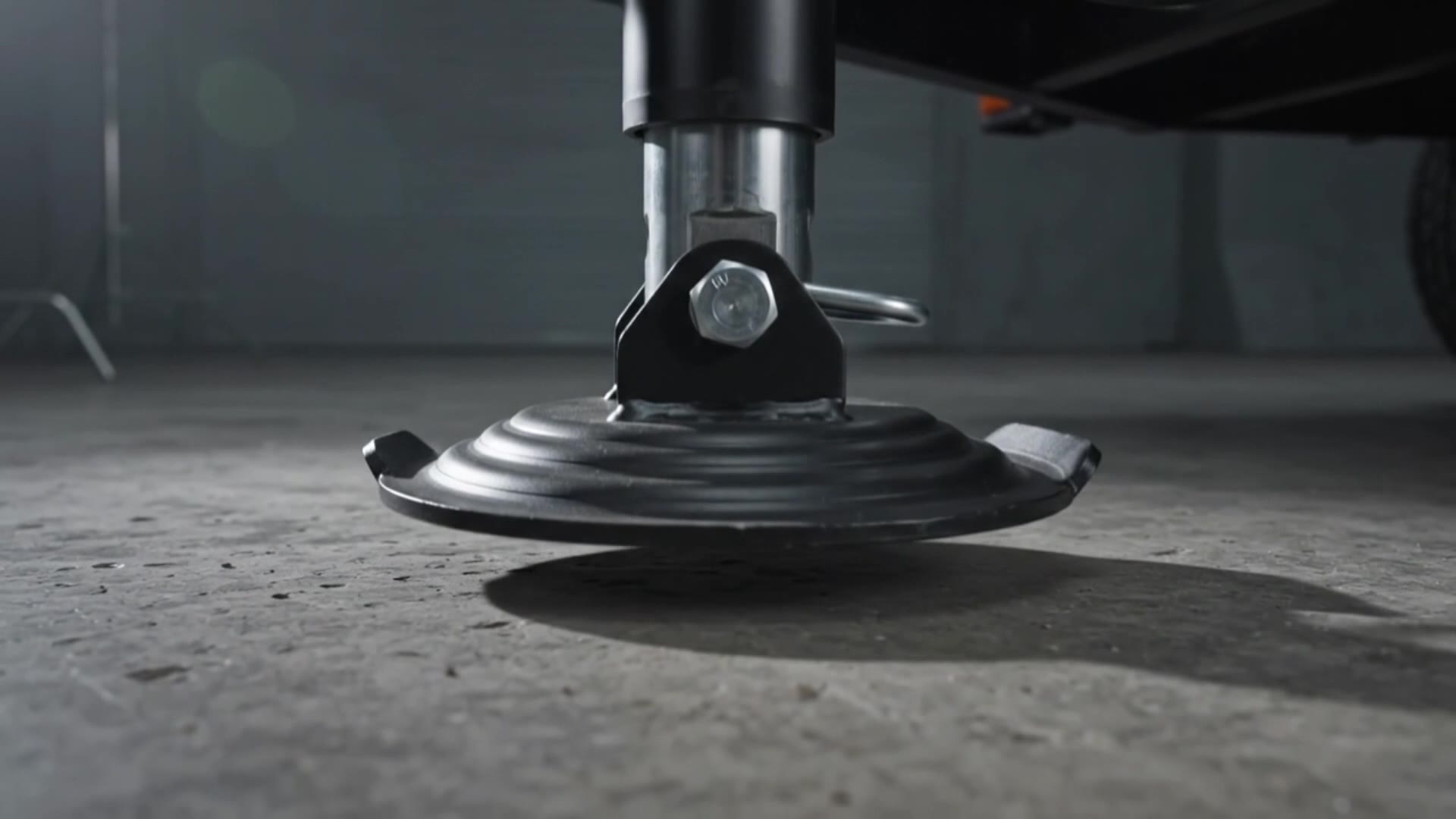
POLESTAR Electric Trailer Jack, 5000lbs Electric Power A-Frame Tongue Jack
5,000 lbs · electric · 1 year
Reviewers say install is quick, often 20 minutes to an hour for a direct factory swap.
The catch. One reviewer says theirs failed after five months with no working customer support, and another warns the bolts are weak.
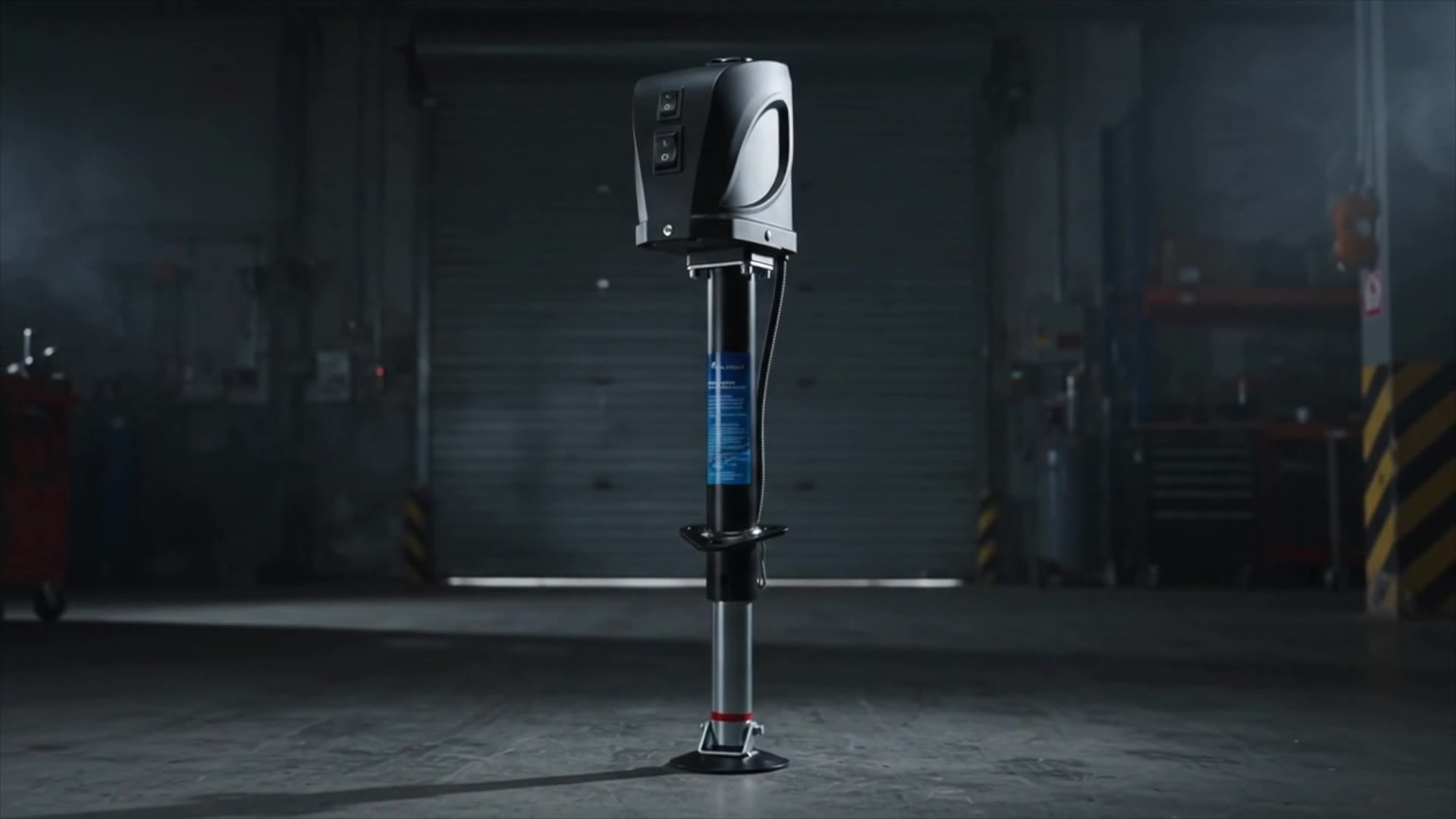
POLESTAR Electric Trailer Jack, 7500lbs Electric Power A-Frame Tongue Jack
7,500 lbs · electric · 1 year
Reviewers say install is remarkably easy, with several saying just three bolts did the job.
The catch. One reviewer says theirs broke shortly after install, and a replacement part still didn't fix it.
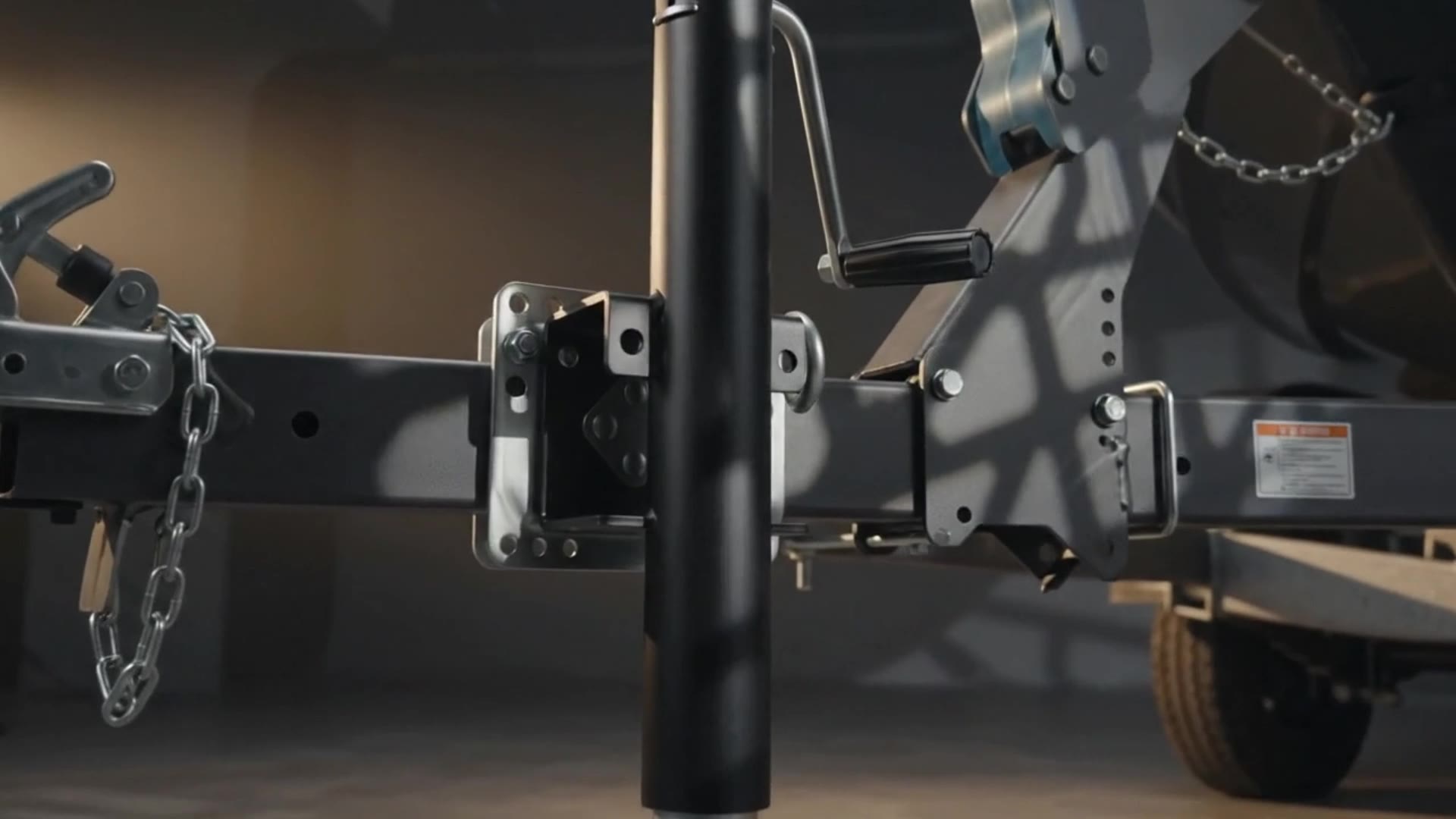
KYX Boat Trailer Jack, 2200 lbs Swivel Trailer Jack with 6 Inch Dual Wheels
2,200 lbs · manual · 1 year
Reviewers say it's high quality for the price, with several calling fitment and instructions clear and easy.
The catch. One reviewer says the mounting hardware feels flimsy and may need frequent tightening.

RVSHARK 5500 lbs A-Frame Trailer Jack, Heavy Duty Trailer Tongue Jack
5,500 lbs · drill or manual · 60 days
Reviewers say it feels far more heavy-duty than budget jacks, with several calling it their new favorite.
The catch. It's rated for 5,500 pounds max, so heavier trailers need a bigger jack.
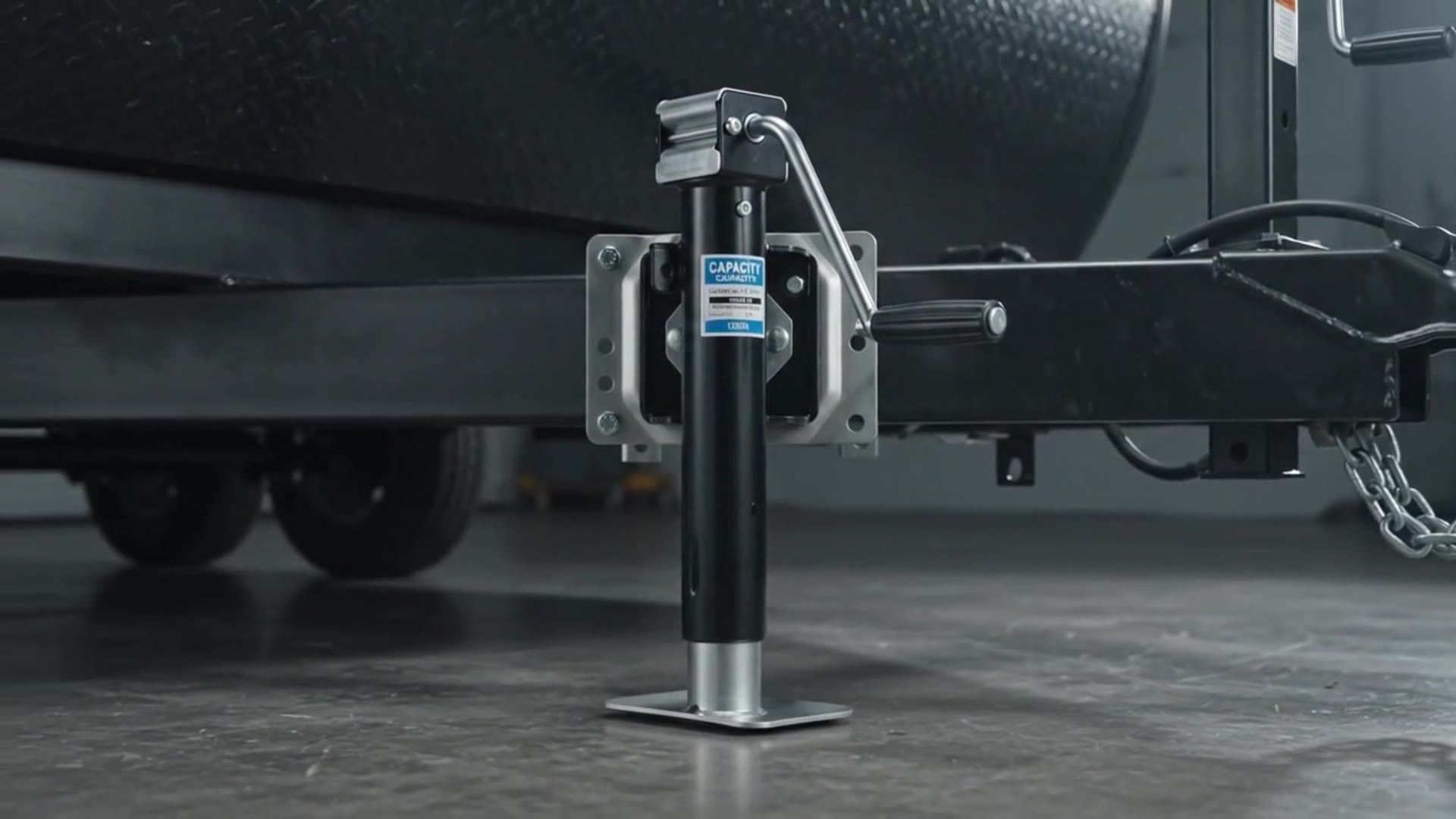
Kohree 3000 lbs Trailer Jack, Heavy Duty Bolt-on, Low-Profile Small, Swivel
3,000 lbs · manual · Not specified
Reviewers say installation is fast and simple, with several swapping out old rusty jacks in minutes.
The catch. It only bolts onto trailer frames between 3 and 5 inches, so measure yours before ordering.
Questions people ask
- Does a 5,000 lb trailer jack mean a 5,000 lb trailer?
No. The rating is the vertical load at the coupler, which is the tongue weight, and on a conventional bumper-pull that is normally 10 to 15 percent of the loaded trailer weight. Check your trailer's rated tongue weight and the jack maker's own guidance rather than matching the two headline numbers.
- How do I find my trailer's tongue weight?
Weigh it loaded if you can, on a scale at the coupler height you actually tow at, because how you pack the trailer moves the number considerably. Failing that, the trailer's data plate gives a rated figure. Estimating from a percentage is a starting point, not a measurement.
- Electric or manual trailer jack?
Electric is genuinely easier and adds a motor, a gearbox and wiring that can fail. Both electric jacks on this page carry a report of total failure, where the manual ones carry complaints about hardware and fit. If you buy electric, locate the emergency crank and try it once before you need it.
- Why do trailer jacks bend or fail?
Over-extension is the one a seller on this page names in its own listing. Run the leg near its limit and the whole load sits on a short section of thread and tube overlap. Mark your jack's maximum extension and use a block under the foot instead of winding out further.
- Can I work under my trailer with the tongue jack holding it up?
No. A tongue jack is for lifting and coupling, not for supporting a trailer you are under. It has no lock against the screw backing off and a small foot that can sink or tip. Chock the wheels, then put rated jack stands under the frame.
- Will a trailer jack fit my frame?
Check before ordering, because this is the most common reason one gets returned. Jacks mount bolt-on, weld-on, or into a tube of a set diameter, and one here fits only frames between 3 and 5 inches. Measure the frame, note the bolt spacing, and photograph the old mount before removing it.
More comparisons
- Portable Power Banks: what reviewers actually report
- Camping Tents: what reviewers actually report
- Sleeping Bags: what reviewers actually report
- Waterproof Phone Pouches: what reviewers actually report
- Phone Battery Cases: what reviewers actually report
- Car Phone Mounts: what reviewers actually report
- Phone Screen Protectors: what reviewers actually report
- USB-C Wall Chargers: what reviewers actually report
- Desktop Charging Stations: what reviewers actually report
- Phone Tripods: what reviewers actually report