 The Fine Print
Nothing here was tested in a lab. Every line below is a synthesis of what verified buyers report in their own reviews, including the complaints, which is the part most roundups leave out.
As an Amazon Associate we earn from qualifying purchases. Product links below are affiliate links, and the price you pay is the same either way. Full disclosure.
One of these is sold as a 1000 watt charging station and states 120 watts in its own specification field, on the same listing. Two separate reviewers ran their own tests and both reported the real output falling far short of the advertised figure. The spec sheet and the buyers agree with each other; only the product name disagrees.
The five below range from a nightstand wireless stand to a power strip with four mains sockets. What follows the table covers how the total wattage gets divided, why the USB-A ports on these are slow no matter what the box says, and the fact that two of the six listings in this category are the same product.
The short answer
- Best rated, and honest about its portsNewdarren 165W 6-Port Desktop Charging... 4.6 stars from 280 ratings, six ports, and reviewers report charging six devices at once without any of them slowing down. It also states plainly that the fast 40 watt charging comes through the USB-C ports only and not the USB-A ones, which is true of every station here and the only one that says so.
- Most ports and the largest sample, with a caveatRoruite 1000W USB-C Charging Station... 4.5 from 615 ratings, ten ports, and reviewers describe it clearing a desk of separate adapters and running a laptop and phone together. The caveat is the headline: it is sold as 1000W and its own specification says 120W, and two reviewers who measured it independently both report the output falling short.
- The only one with mains sockets200W 12-in-1 USB C Charging Station... Four AC outlets alongside eight USB ports, so it takes a laptop brick or a lamp as well as cables, with a 65 watt USB-C port that reviewers say fills a laptop in about half an hour. Two-year warranty, the longest here. The cord is a fixed five feet, so measure before you commit to a spot.
- Best for a nightstand3-in-1 Magnetic Wireless Charger... A folding 3-in-1 magnetic stand for phone, watch and earbuds that packs into a bag for travel, and at 513 ratings it has real evidence behind it. Several reviewers say phone charging is slower than expected, which is what wireless charging does: roughly a quarter of the energy goes to heat rather than the battery.
- Think twice6-Port Charging Station. Six ports and a mix of cable types included, which reviewers like for a household of odd devices. But one reports several ports failing after a few months of normal use, and at 64 ratings there is not enough evidence to know whether that is one bad unit or a pattern.
All 5 compared
| Product | Rated output | Ports | Type | Rating | The catch |
|---|---|---|---|---|---|
| Newdarren 165W 6-Port Desktop Charging Station | 165W | 6 ports | desktop hub | 4.6 (280) | The fast 40-watt charging only comes through the USB-C ports, not the USB-A... |
| Roruite 1000W USB-C Charging Station 10-Port | 120W (box says 1000W) | 10 ports | desktop hub | 4.5 (615) | One reviewer's own testing suggested the real output falls short... |
| 6-Port Charging Station | 50W | 6 ports | desktop hub | 4.5 (64) | One reviewer says several ports stopped working after just a few months... |
| 200W 12-in-1 USB C Charging Station Power Strip | 200W | 8 ports | hub + 4 AC outlets | 4.4 (226) | It's a fixed 5-foot cord, so plan your outlet distance before mounting it. |
| 3-in-1 Magnetic Wireless Charger for Samsung | Not stated | 3 devices, wireless | wireless stand | 4.2 (513) | Several reviewers say phone charging speed runs slower than they expected. |
Sold as 1000 watts, states 120 in its own specification
The product name says 1000W. The wattage field on the same listing says 120 watts. That is not a rounding difference, it is a factor of eight.
What makes this one worth taking seriously rather than shrugging at is that the buyers independently agree with the spec sheet. Two separate reviewers measured the output themselves and both reported it falling well short of the advertised total. When the specification and the reviews line up against the headline, the headline is the outlier.
There is no charitable reading that reaches 1000 watts. A domestic socket in the US supplies around 1,800 watts in total, so a desktop charging hub drawing more than half the circuit would be a remarkable object. Read the wattage field, not the name.
The total is shared, and USB-A cannot use much of it
As with any multi-port charger, the rated wattage is a pool to be divided rather than a figure per port. On a six or ten port station that division matters far more than it does on a two-port wall plug.
There is a second limit that catches people out. Fast charging needs USB-C Power Delivery, and USB-A cannot do it. A USB-A port tops out somewhere around 12 to 18 watts regardless of how large the number on the box is, so a station advertising 165 watts across six ports is not offering anything like that through its USB-A sockets.
One listing here says so directly, noting that its 40 watt fast charging comes through the USB-C ports only. Every station on this page works that way. It is the only one that mentions it, which is worth something on its own.
Two of the six listings are the same product
Two entries in this category share an identical Amazon title, the same parent listing, the same ten ports, the same 120 watt specification and the same 4.5 rating from the same 615 ratings. They are one product sold through two listings.
Only one appears in the table above, because comparing a product against itself tells you nothing and makes the page look like it has more options than it does.
It is worth knowing this happens when you browse a category yourself. If two results have suspiciously identical review counts, they are usually the same item, and the choice you think you are making between them is not a choice.
A US power strip listing 240 volts
The power strip on this page states 240 volts in its voltage field, alongside a Type B three-pin North American plug. US mains is nominally 120 volts. Those two facts cannot both describe the same product.
It is almost certainly a spec sheet written for several markets with the wrong number left in, rather than anything unsafe: the plug type, the AC outlet count and the warranty all read correctly.
It belongs in the same pile as the chargers elsewhere on this site that list their output as 120 volts. These fields are typed in by sellers and nobody checks them. Use the port count, the wattage and the plug type; treat the rest as decoration.
Individual ports failing is the way these die
A wall charger tends to work or not work. A charging station has six or ten independent circuits, and the reported failure here is that some of them stop while the rest carry on.
One reviewer on this page describes several ports failing after a few months of regular use, which leaves a working station with fewer usable sockets and no obvious moment at which to call it broken.
Test every port when it arrives, not just the one you plug into first. It takes five minutes with a single cable and it is the only way to know what you actually received while you can still return it.
Every one, in detail
As an Amazon Associate we earn from qualifying purchases. Product links below are affiliate links, and the price you pay is the same either way. Full disclosure.

Newdarren 165W 6-Port Desktop Charging Station
165W · 6 ports · desktop hub
Reviewers say it charges up to six devices at once without any of them slowing down.
The catch. The fast 40-watt charging only comes through the USB-C ports, not the USB-A ones.
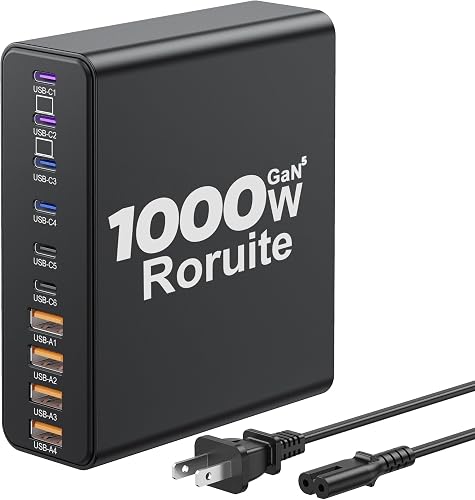
Roruite 1000W USB-C Charging Station 10-Port
120W (box says 1000W) · 10 ports · desktop hub
Reviewers say it completely cleared the clutter of separate chargers off their desk.
The catch. One reviewer's own testing suggested the real output falls short of the advertised total wattage.
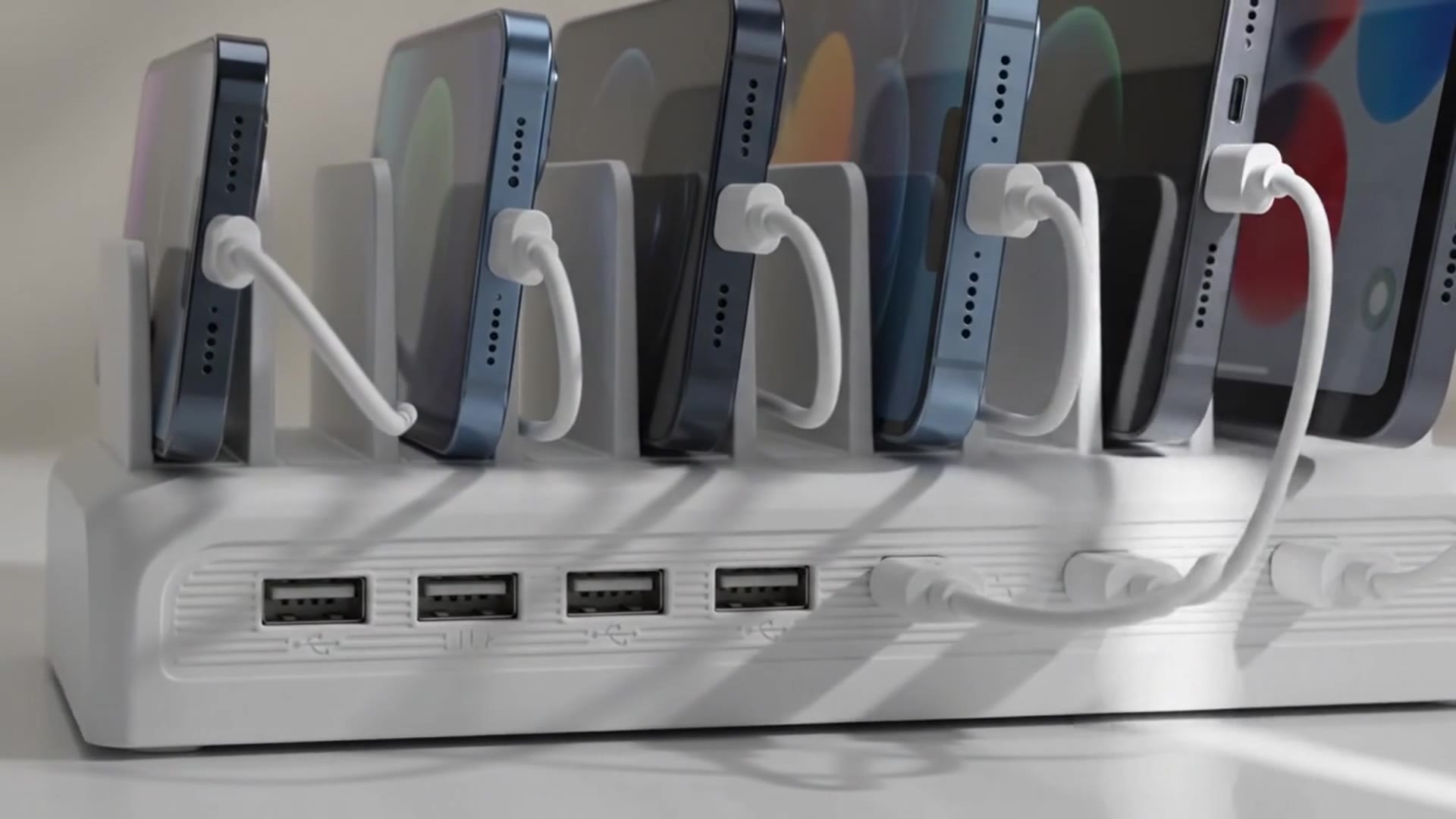
6-Port Charging Station
50W · 6 ports · desktop hub
Reviewers say it's an easy way to keep a household of devices charged from one outlet.
The catch. One reviewer says several ports stopped working after just a few months of regular use.
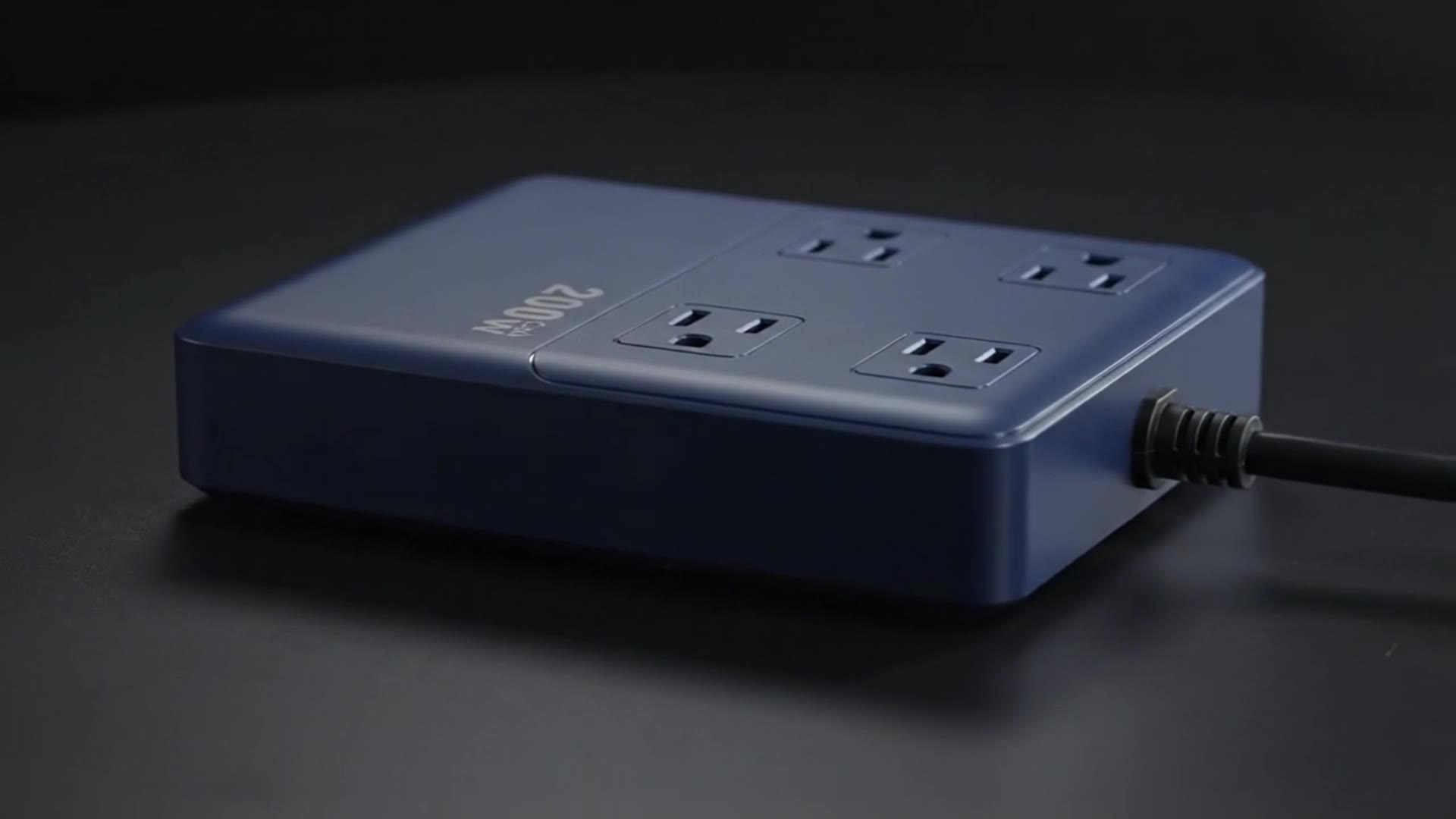
200W 12-in-1 USB C Charging Station Power Strip
200W · 8 ports · hub + 4 AC outlets
It combines four AC outlets and eight USB ports to power up to twelve devices at once.
The catch. It's a fixed 5-foot cord, so plan your outlet distance before mounting it.
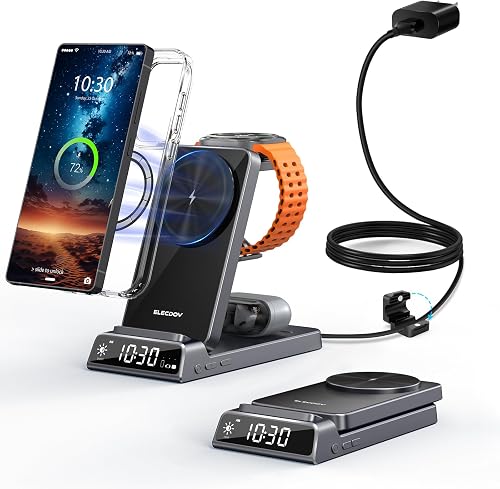
3-in-1 Magnetic Wireless Charger for Samsung
Not stated · 3 devices, wireless · wireless stand
Reviewers like being able to charge a phone, watch, and earbuds from one nightstand stand.
The catch. Several reviewers say phone charging speed runs slower than they expected.
Questions people ask
- Is a 165W six-port station 165 watts per port?
No. It is a pool shared across all of them, and using more ports takes power away from each. It is also a ceiling rather than a promise: what any device draws is negotiated between it and the charger.
- Why are the USB-A ports so much slower than USB-C?
Because fast charging uses USB-C Power Delivery, which USB-A cannot do. A USB-A port tops out around 12 to 18 watts no matter what the station is rated for. One listing here says outright that its 40 watt charging is USB-C only; they all work that way.
- Does a 1000W charging station exist?
Not as a desktop USB hub. The one advertised that way on this page lists 120 watts in its own specification field, and two reviewers who measured it found the real output well short of the headline. A US socket supplies about 1,800 watts in total.
- Can one station charge a laptop and a phone at full speed?
Only if its total rating covers both at once and the laptop is on a USB-C Power Delivery port. A 65 watt laptop plus a 25 watt phone needs 90 watts of real capacity, not a large number on the box.
- Why did some ports stop working?
A station has many independent circuits and they can fail one at a time, which is the failure reported here. Test every port the day it arrives rather than only the one you use, so you find out inside the return window.
- Is a magnetic wireless stand a charging station?
It charges several devices at once, so it sits in the same category, but it is a different thing from a desktop USB hub. It will also be slower, since wireless loses roughly a quarter of the energy as heat. Good beside a bed, poor as a desk hub.
More comparisons
- Portable Power Banks: what reviewers actually report
- Camping Tents: what reviewers actually report
- Sleeping Bags: what reviewers actually report
- Waterproof Phone Pouches: what reviewers actually report
- Phone Battery Cases: what reviewers actually report
- Car Phone Mounts: what reviewers actually report
- Phone Screen Protectors: what reviewers actually report
- USB-C Wall Chargers: what reviewers actually report
- Phone Tripods: what reviewers actually report
- Trailer Jacks: what reviewers actually report