 The Fine Print
Nothing here was tested in a lab. Every line below is a synthesis of what verified buyers report in their own reviews, including the complaints, which is the part most roundups leave out.
As an Amazon Associate we earn from qualifying purchases. Product links below are affiliate links, and the price you pay is the same either way. Full disclosure.
IPX8 is the rating almost every waterproof pouch leads with, and it does not mean a depth. The standard defines it as continuous immersion under conditions specified by the manufacturer, which puts the specification back in the hands of the company selling you the pouch. Not one of the listings below states a depth or a duration.
So the claimed rating is close to useless as a comparison, which leaves the reviews. Two of the five here carry a report of water getting in, one of them from an owner who says they sealed it correctly, and a third says the hard part is knowing whether it sealed at all. That is the real subject of this page, along with the reason your touchscreen will not work once you are actually under the water.
The short answer
- Best reviewedRethuen Large Floating Waterproof Phone... 4.6 stars from 158 ratings, the highest score here, with buyers reporting dry phones through Cancun and Niagara Falls. The oversized pocket takes a phone plus a passport or an insulin pump, which is the feature people actually mention. It claims no IP rating at all, and one reviewer found the touchscreen unreliable through the material.
- The only one designed for actual divingUnderwater Phone Case for Snorkeling. It has side button controls, which is the correct answer to a problem every other pouch here ignores: a capacitive touchscreen does not work underwater. Reviewers shoot one-handed while snorkelling. The counterweight is a 3.8 rating from 84 ratings, the lowest here, and reviewers say it is hard to tell whether it is fully sealed before going in.
- Longest warrantyacer Floating Waterproof Phone Pouch... 4.5 from 97 ratings and an 18-month warranty, which is unusual in a category where the pouches are treated as disposable. Reviewers report phones staying dry through long stretches in pools and rivers. One says water got in even after sealing it correctly, which is the complaint worth weighing here.
- Floats on its own, and claims IP68Niveaya Floating Waterproof Phone... 4.5 from 89 ratings, with reviewers reporting dry phones through kayaking, rafting and multi-day boat trips, and it floats rather than sinking when dropped. One reviewer had water get in and needed days to dry the phone out, which is the outcome this whole category exists to prevent.
- Best for carrying more than a phoneWaterproof Phone Pouch 2-Pack. A dual-pocket design that takes cash, cards and keys alongside the phone, with a year's warranty. Reviewers report hours submerged at theme parks and on snorkelling trips. Only 31 ratings behind it, so treat the 4.5 as thin evidence rather than a strong signal.
All 5 compared
| Product | Claimed rating | Pack | Controls | Rating | The catch |
|---|---|---|---|---|---|
| Rethuen Large Floating Waterproof Phone Pouch, 2Pack... | None stated (waterproof) | 2-pack | touchscreen only | 4.6 (158) | One reviewer said the touchscreen didn't always respond well through... |
| acer Floating Waterproof Phone Pouch 2-Pack | IPX8 | 2-pack | touchscreen only | 4.5 (97) | One reviewer said water still got in even after sealing it correctly. |
| Niveaya Floating Waterproof Phone Pouch, 2 Pack Up... | IP68 | 2-pack, fits 8.5" | touchscreen only | 4.5 (89) | One reviewer said water got inside theirs and their phone had to be dried out... |
| Waterproof Phone Pouch 2-Pack | IPX8 | 2-pack | touchscreen only | 4.5 (31) | One reviewer said the pouches fell a bit short of expectations for a beach... |
| Underwater Phone Case for Snorkeling | IP68 | single | side buttons | 3.8 (84) | A couple of reviewers say it can be hard to tell if the case is fully sealed... |
IPX8 does not mean a depth, and nobody here states one
The IP system runs to IPX7, which is defined precisely: immersion in one metre of water for thirty minutes. IPX8 is defined as immersion beyond that, under conditions specified by the manufacturer. The standard deliberately leaves the numbers blank for the seller to fill in.
Which means IPX8 on its own tells you the manufacturer intends it to survive more than a metre, and nothing else. A pouch tested to 1.5 metres for ten minutes and one tested to ten metres for two hours both print IPX8. On this page four claim IPX8 or IP68, one claims nothing at all beyond the word waterproof, and not one states a depth or a time anywhere.
The X, incidentally, means the dust rating was never tested. IP68 adds a dust figure to the same water claim, which for a sealed bag is not information you need. Where you see both across a set of otherwise identical products, as here, it is a sign the numbers were chosen rather than measured.
Your touchscreen will not work underwater
This is physics rather than a product flaw and it surprises almost everyone. A phone screen senses your finger by the way it disturbs a small electric field. Water disturbs that field too, so once the screen is submerged it either stops responding or registers touches you did not make.
The pouch does not cause this and a better pouch will not fix it. Above the water a touchscreen works fine through thin plastic, which is why reviewers testing in the kitchen sink are satisfied and reviewers in a pool are not. One reviewer here reports exactly that, saying the screen would not respond reliably while taking photos.
The workaround is a physical button, and your phone already has one: the volume key fires the camera shutter. One product on this page is built around that, with side button controls, and it is the only one in the group designed for what people actually buy these for.
Most seal failures are a hair, a grain of sand, or sunscreen
These close with a clip that presses two strips of plastic together against a gasket. The seal is only as good as the cleanliness of that gasket, and the things that break it are invisible: a single hair lying across the strip, a grain of sand, a smear of sunscreen thinning the contact.
That is why a pouch can be sealed correctly, in the owner's honest account, and still flood. Two of the five here carry a report of water getting in, one of them explicitly after sealing it correctly, and another describes the deeper problem plainly: it is hard to tell whether the case is fully sealed before going in.
Wipe the sealing strip clean and dry every single time, before every use, not just the first. Sunscreen and hair oil are the two worst offenders and they are exactly what is on your hands at a beach.
The test that costs nothing and prevents the only outcome that matters
Put a folded sheet of dry kitchen paper inside, seal it with no phone in it, weight it down under water for half an hour, then open it over a dry surface and look at the paper.
Do this the day the pouch arrives, while you can still return it, and again before every trip rather than once. A gasket that sealed in June has spent a summer in a bag with sand and sunscreen, and the pouch that failed for the reviewer whose phone needed days to dry out would have failed this test first.
It takes half an hour and it is the difference between a returned pouch and a ruined phone.
Floating needs trapped air, and air behaves differently at depth
Three of these five advertise floating, and what makes them float is the cushion of air you seal in alongside the phone. It is a genuinely good feature, because a dropped phone that bobs is a recovered phone.
It has two consequences worth knowing. The trapped air fights you when you try to take the phone underwater deliberately, so snorkelling with one means working against its buoyancy. And air compresses as you descend, so the pouch visibly tightens around the phone at depth and the pressure across the seal rises with it.
For surface use, floating is what you want. For diving down, a rigid case designed for it, like the one here with buttons, is the better tool.
Salt, chlorine and sunscreen are what age these
The pouch material and the gasket are both plastics, and all three of salt water, pool chlorine and sunscreen oils degrade them. The failure is gradual: the window clouds, the plastic stiffens, and the gasket loses the softness it needs to seal.
Rinse in fresh water and dry it fully after every use, and store it open rather than clipped shut so the gasket is not held compressed for months.
These come in twos for a reason. Treat a pouch as something that wears out over a season or two rather than a permanent piece of kit, and retire it at the first sign of clouding or stiffness instead of finding out at the beach.
Every one, in detail
As an Amazon Associate we earn from qualifying purchases. Product links below are affiliate links, and the price you pay is the same either way. Full disclosure.

Rethuen Large Floating Waterproof Phone Pouch, 2Pack Cell Phone Dry Bag
None stated (waterproof) · 2-pack · touchscreen only
Reviewers say it kept their phones completely dry through trips to Cancun and Niagara Falls.
The catch. One reviewer said the touchscreen didn't always respond well through the material while taking photos.

acer Floating Waterproof Phone Pouch 2-Pack
IPX8 · 2-pack · touchscreen only
Reviewers say it keeps phones fully dry through long stretches in the pool or river.
The catch. One reviewer said water still got in even after sealing it correctly.

Niveaya Floating Waterproof Phone Pouch, 2 Pack Up to 8.5 Inch
IP68 · 2-pack, fits 8.5" · touchscreen only
Reviewers say it kept their phone completely dry on kayaking trips, river rafting, and multi-day boat trips.
The catch. One reviewer said water got inside theirs and their phone had to be dried out for days.
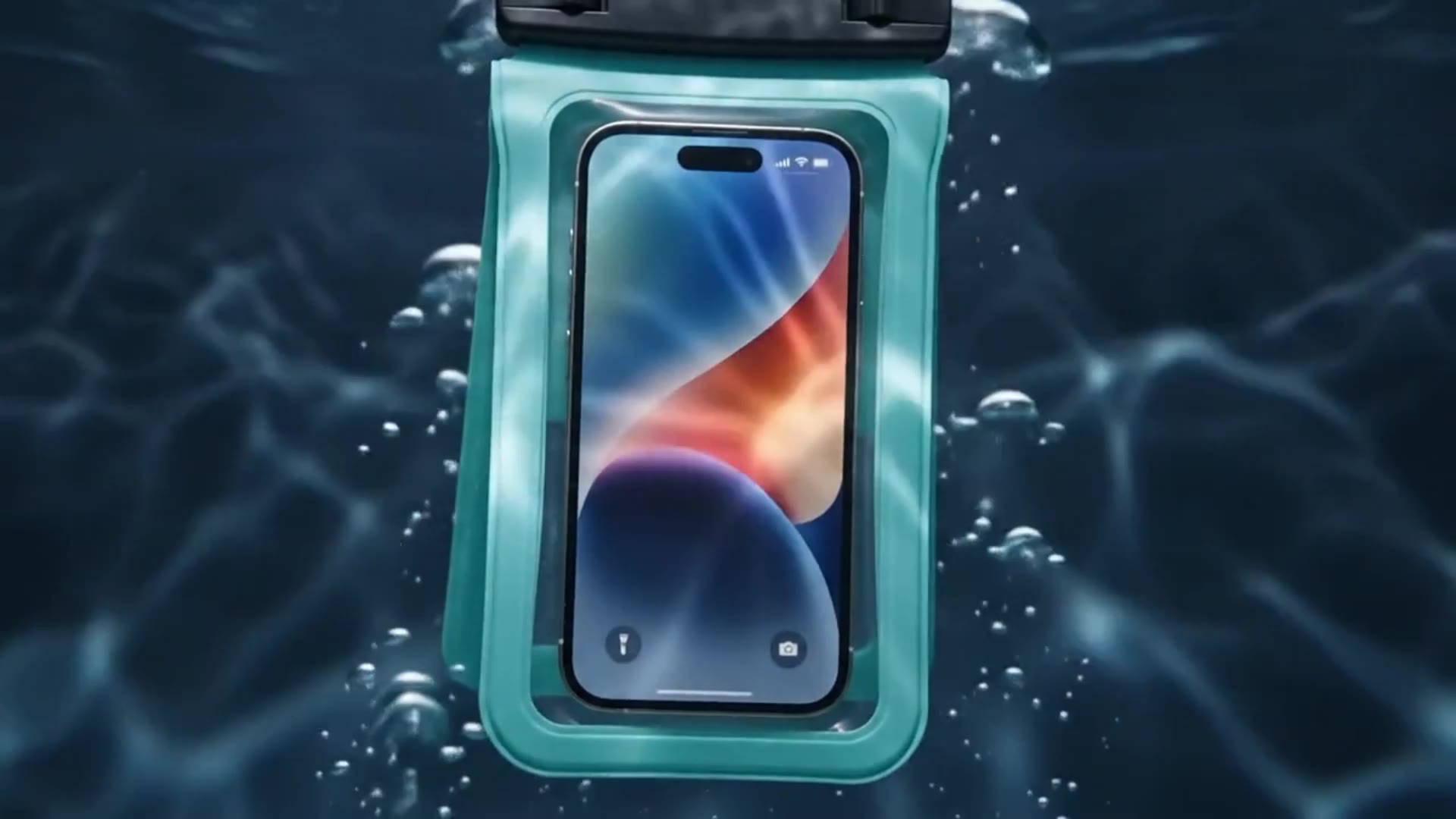
Waterproof Phone Pouch 2-Pack
IPX8 · 2-pack · touchscreen only
Reviewers say it kept phones completely dry through hours submerged at theme parks, pools, and snorkeling trips.
The catch. One reviewer said the pouches fell a bit short of expectations for a beach and snorkeling trip, even though the double-space design itself worked as advertised.

Underwater Phone Case for Snorkeling
IP68 · single · side buttons
Reviewers say it kept their phone completely dry through days of snorkeling and diving.
The catch. A couple of reviewers say it can be hard to tell if the case is fully sealed before going in.
Questions people ask
- What depth is an IPX8 phone pouch actually rated for?
Whatever the manufacturer decided, and they are not obliged to tell you. IPX7 means one metre for thirty minutes; IPX8 means more than that under conditions the seller specifies. None of the listings on this page state a depth or a duration anywhere, so the rating is not usable as a comparison.
- Why does my touchscreen stop working underwater?
Because water disturbs the same electric field your finger does, so the screen either ignores you or registers phantom touches. No pouch fixes this. Use the volume key as a camera shutter, or buy a case with physical side buttons.
- How do I know the pouch is sealed properly?
Test it rather than trusting it. Seal dry kitchen paper inside with no phone, weight it under water for half an hour, and check the paper. Do it when it arrives and again before every trip. A hair or a smear of sunscreen on the sealing strip is enough to flood one.
- Do floating phone pouches really float?
Yes, because you seal a cushion of air in with the phone. That also means they resist being taken underwater deliberately, and the trapped air compresses as you descend, tightening the pouch and loading the seal.
- Can I take underwater photos through one?
Yes, but not by tapping the screen, which will not respond once submerged. Frame the shot before you go under and fire it with the volume key, or use a case with dedicated side buttons.
- How long does a waterproof pouch last?
Treat it as a season or two. Salt, chlorine and sunscreen all degrade the plastic and the gasket, so the window clouds and the seal stiffens over time. Rinse and dry after use, store it open rather than clipped, and retire it at the first sign of stiffness.
More comparisons
- Portable Power Banks: what reviewers actually report
- Camping Tents: what reviewers actually report
- Sleeping Bags: what reviewers actually report
- Phone Battery Cases: what reviewers actually report
- Car Phone Mounts: what reviewers actually report
- Phone Screen Protectors: what reviewers actually report
- USB-C Wall Chargers: what reviewers actually report
- Desktop Charging Stations: what reviewers actually report
- Phone Tripods: what reviewers actually report
- Trailer Jacks: what reviewers actually report